Co-Creative Canvas
An AI creativity augmentation tool for artists · 2025
Highlights
- Presented and demonstrated at Stanford University. Featured panelist at Art in the Age of AI: Conversations and Creations (November 5, 2025), sponsored by the Stanford Institute for Human-Centered Artificial Intelligence (HAI).
- Developed at the Stochastic Labs residency in Berkeley, California, where visitors and fellow residents tried the canvas hands-on.
- Featured in CURA. Magazine. The profile "Yvonne Fang" by Linnéa Ruiz Mutikainen (July 28, 2026) discusses the Co-Creative Canvas as one of the AI-powered creative tools in my practice.
The Co-Creative Canvas is an AI creativity augmentation tool for artists. It is a probabilistic canvas that allows artist control, creative flow state, and craft, and breaks away from conventional prompt-based image generation UI. It helps artists enjoy and explore collaboration with AI without having to sacrifice their own craft and control.

No prompts or buttons — all interactions happen through dragging and drawing.
Vary Mode
This feature allows artists access to the possibility space around their current drawing, accessed via a compass-like UI. Artists can pin any ideas they like as references, and modify their drawing. The canvas is no longer blank or static.
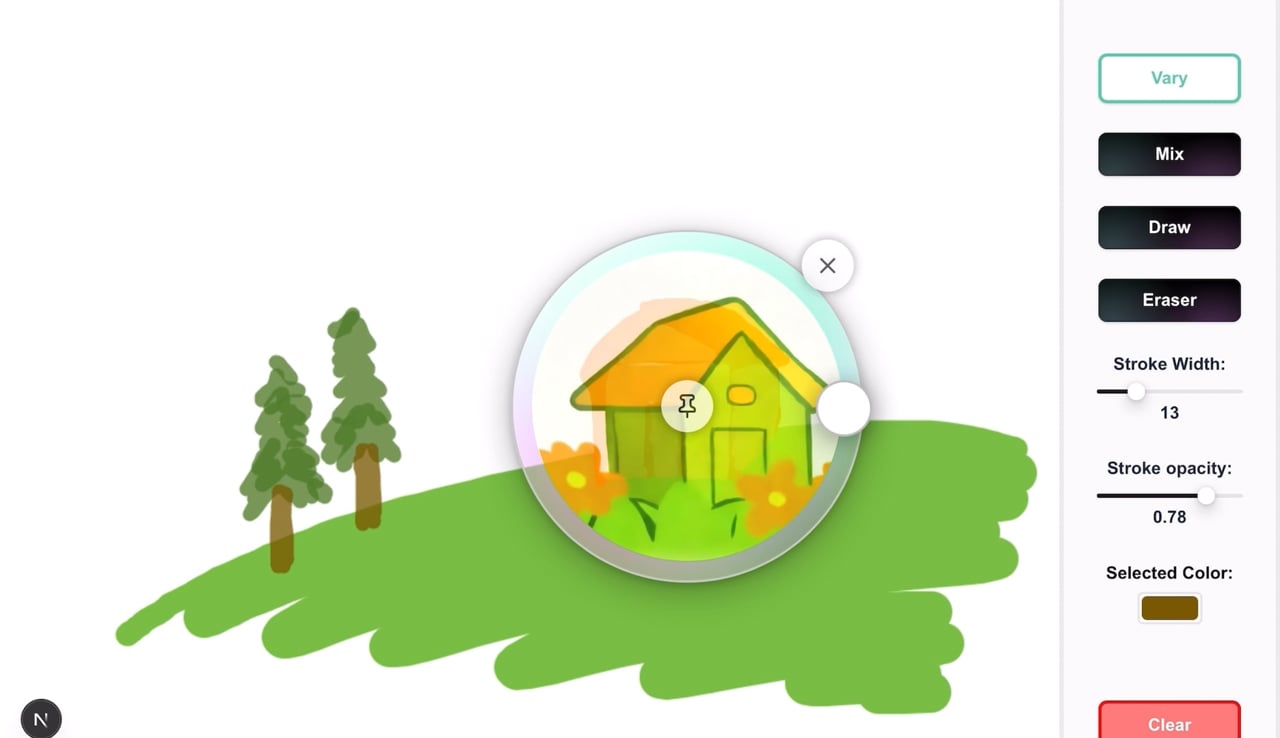
▶ Watch the Vary Mode demo: vimeo.com/1106260400
Mix Mode
Artists can add any thing-ness to anything. They can drag any subject in their drawing onto another subject and mix the two. The result can be rendered directly onto the canvas, or used as a reference.
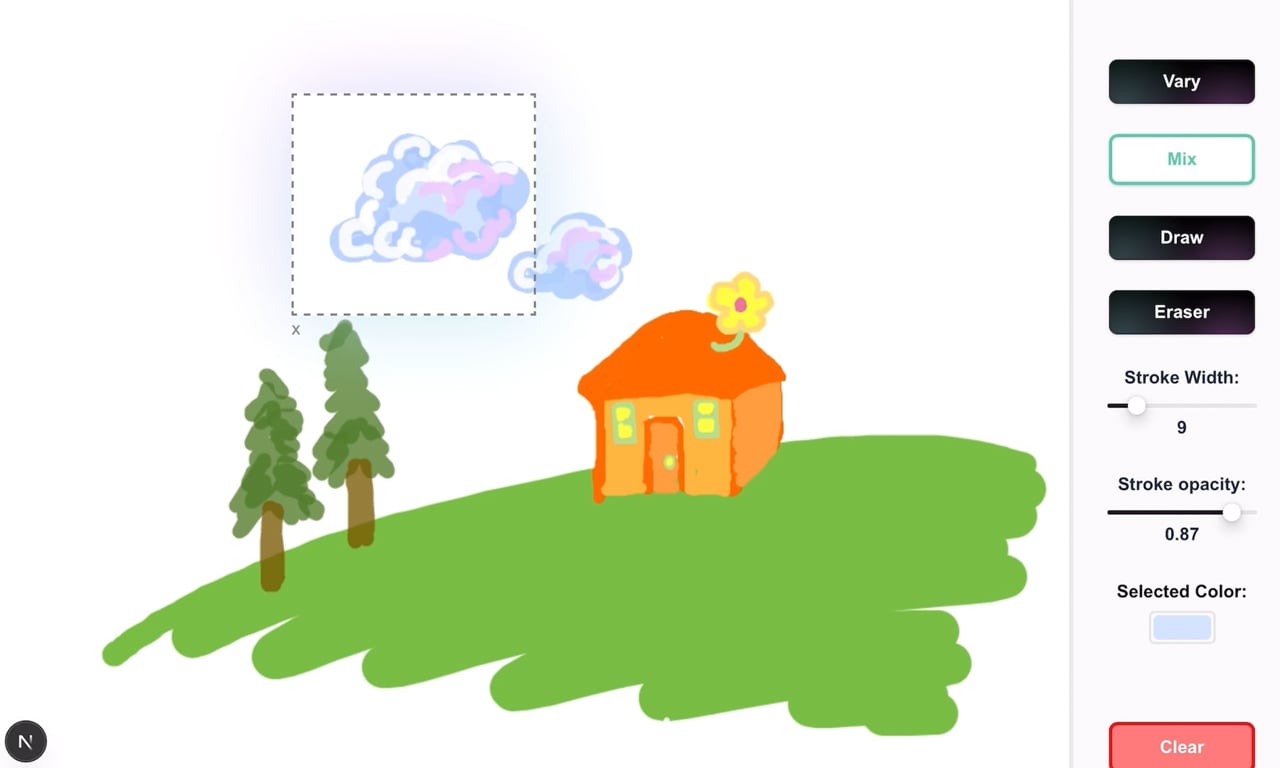
▶ Watch the Mix Mode demo: vimeo.com/1106260388
Graft Mode
The canvas becomes malleable, and any object on it can be "grafted" onto another object, just like grafting two plant species.
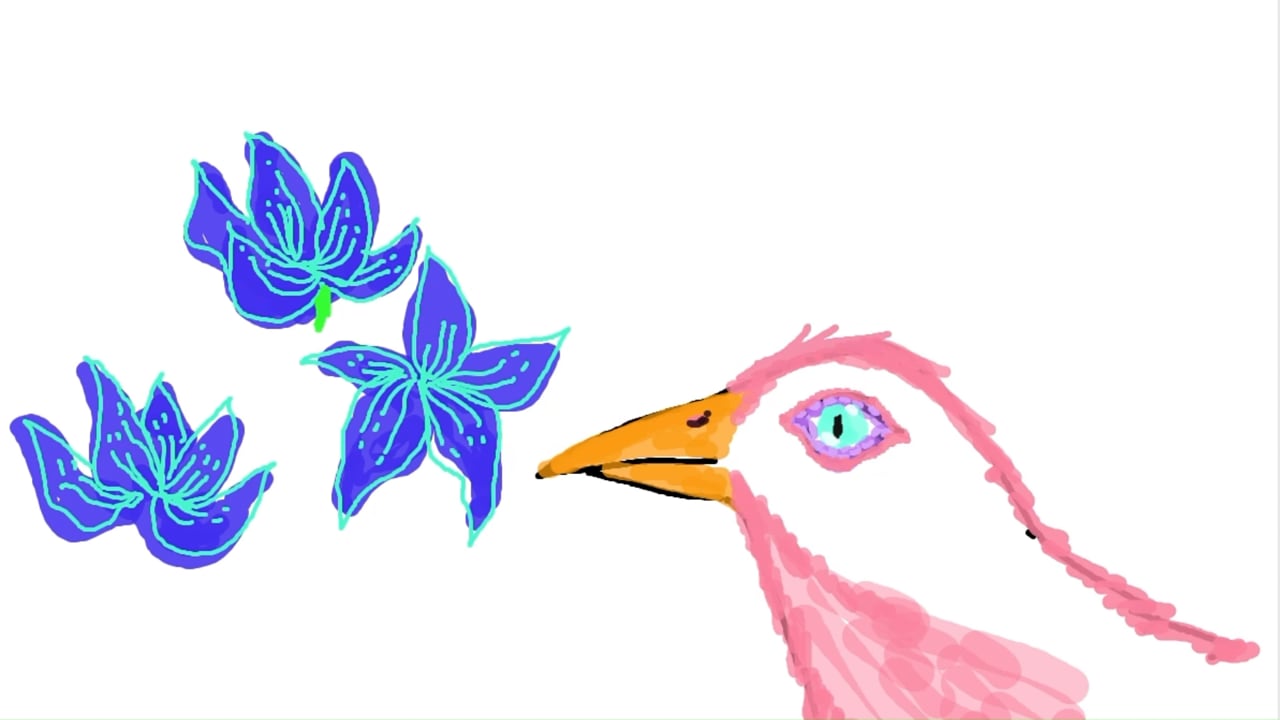
▶ Watch the Graft Mode demo: vimeo.com/1117508570
Stroke Suggest
Artists can see an endless ambient stream of visual possibilities play out in real time beneath their own drawing. A bit similar to an "auto-suggest for brush strokes."
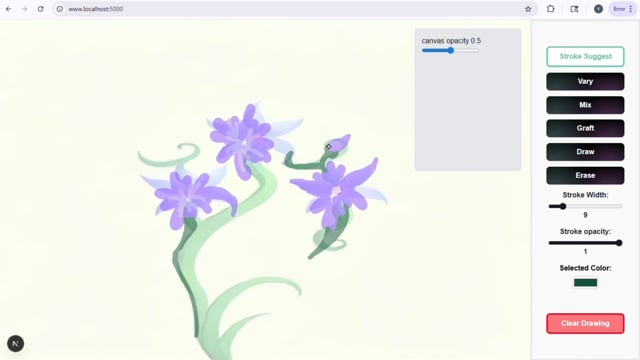
▶ Watch the Stroke Suggest demo: vimeo.com/1123744106
Developed at the Stochastic Labs Residency
The Co-Creative Canvas was developed during my residency at Stochastic Labs in Berkeley, California, a residency and incubator for artists, engineers and scientists working at the intersection of art, technology and science. Visitors and fellow residents tried the canvas hands-on, drawing on it with pen tablets and laptops.


Visitors trying the Co-Creative Canvas at Stochastic Labs, Berkeley.
Presented at Stanford: Art in the Age of AI
On November 5, 2025, I presented and demonstrated the Co-Creative Canvas as a featured panelist at Art in the Age of AI: Conversations and Creations at Stanford University. The event was hosted by the Stanford affinity group Authenticity in Flux and sponsored by the Stanford Institute for Human-Centered Artificial Intelligence (HAI). I was one of three featured artist-engineers, alongside cognitive scientist-artist Ahna Girshick and computational portrait engineer Stephen Milborrow. The program paired a 45-minute panel discussion on how AI is reshaping artistic authenticity, authorship and creative expression with live demonstrations of each panelist's work, for an audience of Stanford faculty, students, engineers and artists.


The panel discussion at Stanford.
Press
CURA. Magazine, "Yvonne Fang," by Linnéa Ruiz Mutikainen, July 28, 2026. The profile discusses my AI- and ML-powered world-building pipelines and creative tools, including the Co-Creative Canvas.
Motivation
Building creative tools truly made to augment artist creativity is important, because it opens up new co-creative experiences that were not possible before, such as drawing on a probabilistic and fluid canvas. It also opens up alternatives for using AI image generation for inspiration, and not necessarily as an end in itself, which is an important alternative in light of the creative industry’s concern over copyright issues with these models.
Related Prototypes
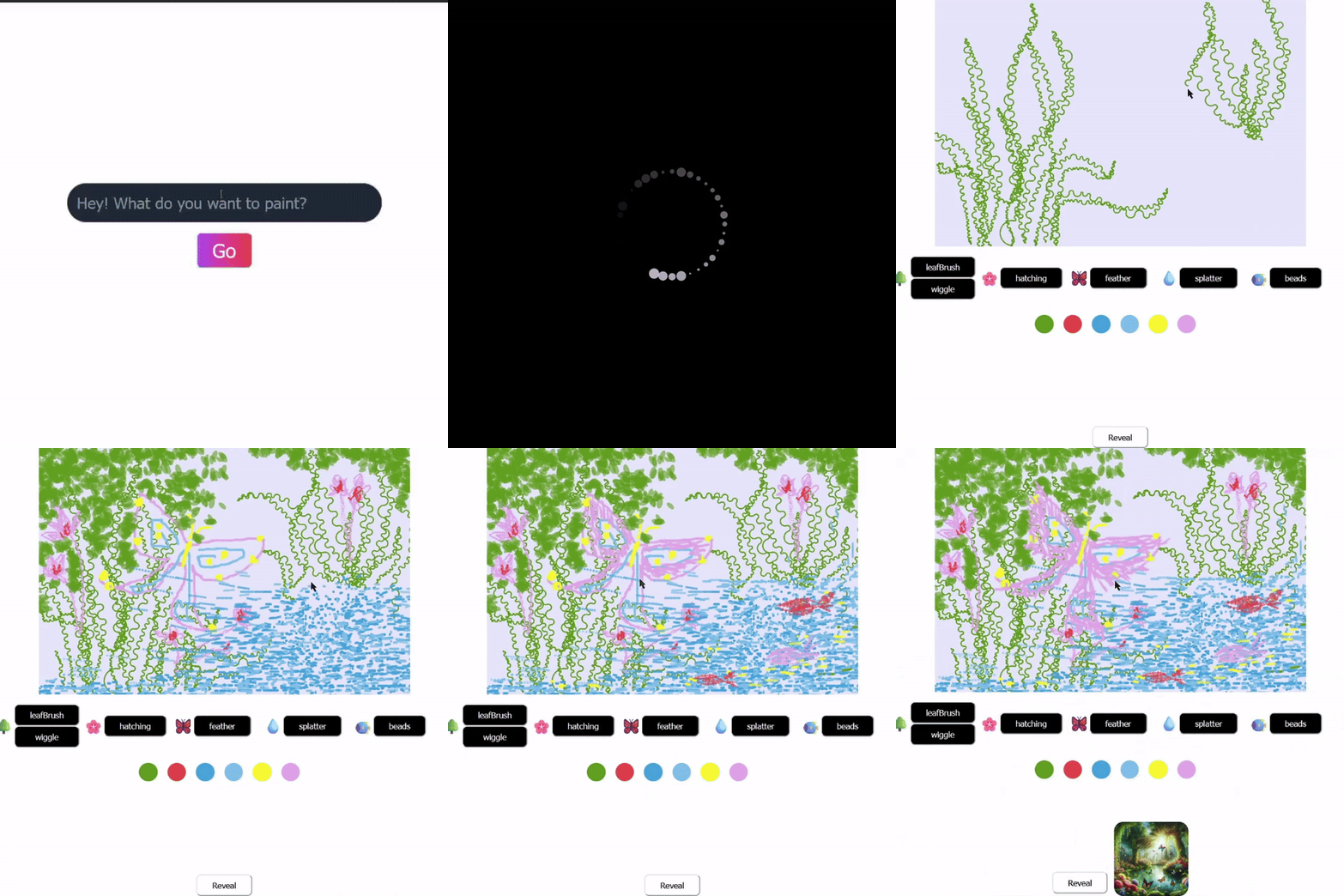
This is a related prototype that breaks the prompt in, image out paradigm, which I think constrained imagination and craft — a drawing app which generates brushes based on the semantic elements in the image AI generated, instead of just displaying the generated image as the final output.
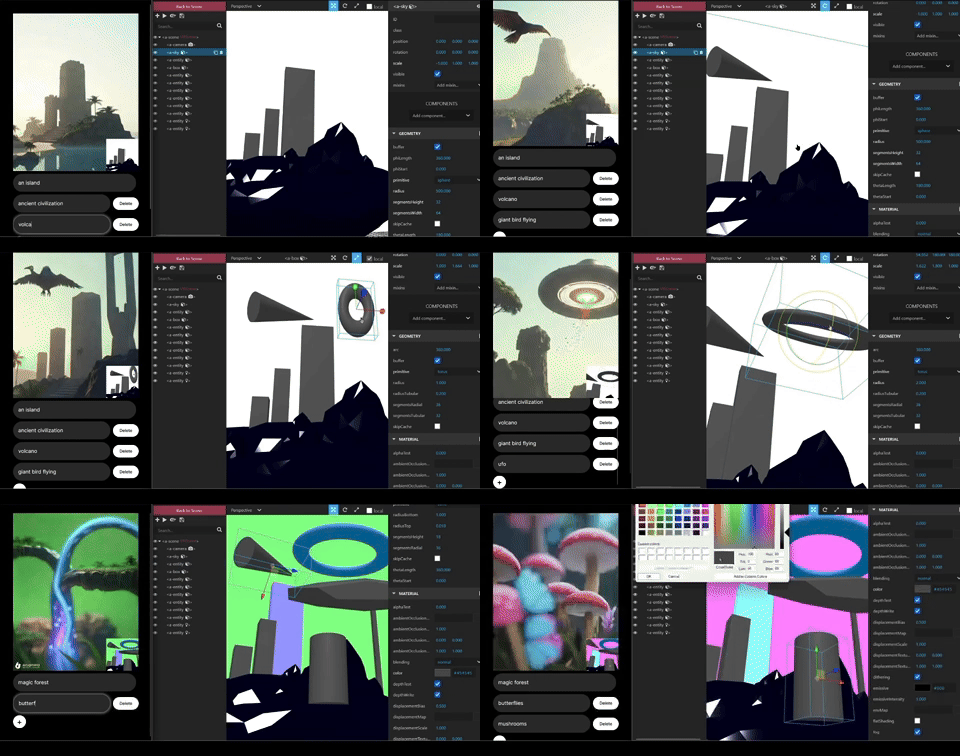
This is an interface for world builders/game designers, where they can iterate through many versions of a world by simply composing a basic 3D scene, and adding or subtracting elements in that world in the UI on the left. This tool focuses on ideation and creative flow.